
Smart Parking Guidance Systems for Malls and Hospitals in Saudi Arabia
Discover how intelligent parking guidance technology helps malls, hospitals and major developments improve parking operations, streamline vehicle movement and create a better visitor experience.
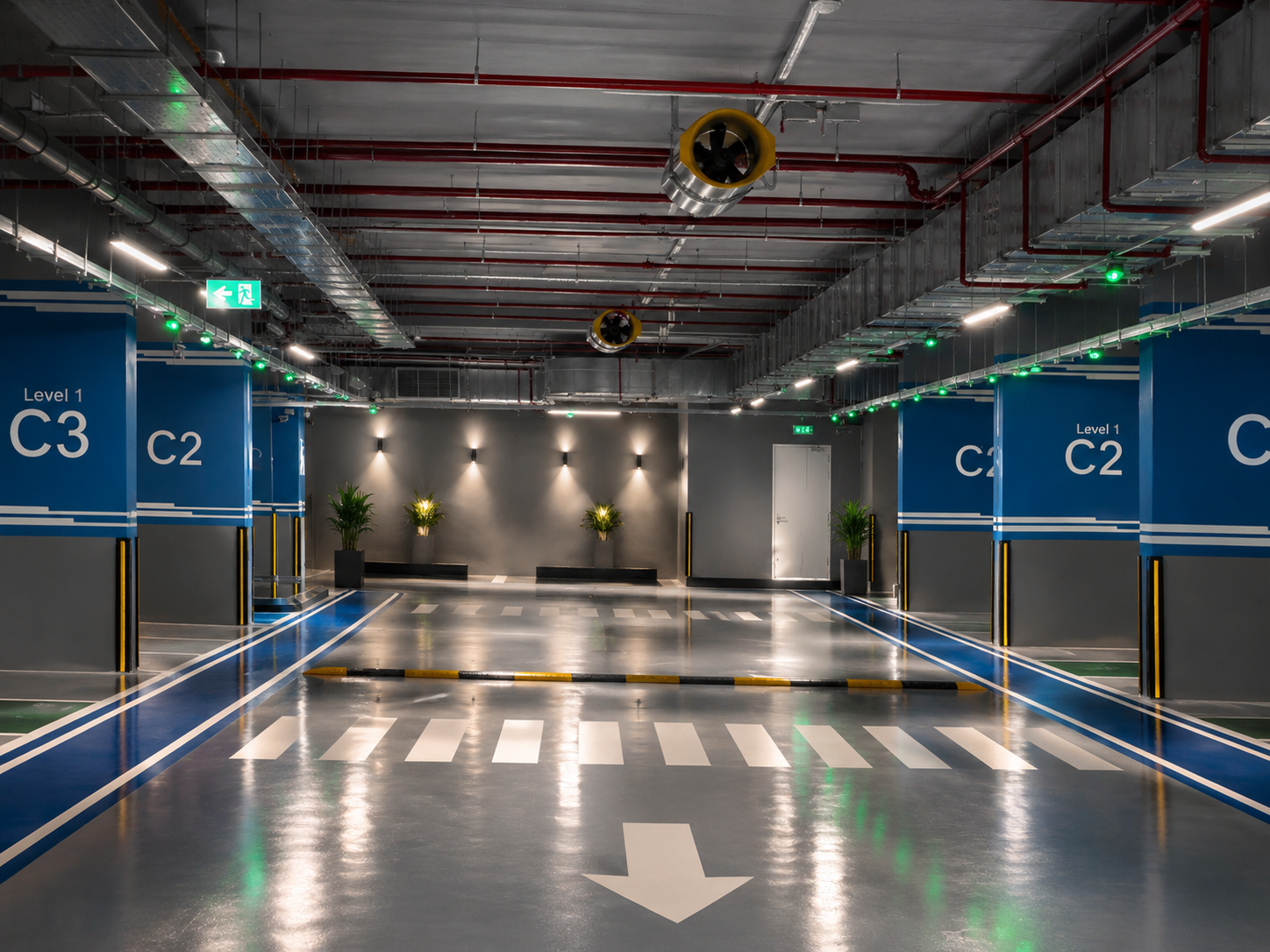
As Saudi Arabia continues to expand its urban infrastructure, commercial destinations and healthcare facilities face increasing demand for convenient and well-organised parking. Large shopping malls and busy hospitals must accommodate substantial vehicle traffic while ensuring a smooth and accessible experience for visitors.
Traditional parking operations can make it difficult for drivers to locate available spaces quickly. Congestion at entrances, unnecessary circulation and unclear directions can affect the visitor experience and the efficiency of the facility.
Smart parking guidance systems address these challenges by combining space-detection technology, real-time information and visual guidance to help drivers navigate parking facilities more efficiently.
A well-designed parking guidance system can improve visibility of available spaces, simplify wayfinding and support more efficient use of existing infrastructure.
The Parking Challenges Facing Malls and Hospitals
Malls and hospitals have different operating requirements, but both depend on parking that is reliable, accessible and easy to navigate. During peak periods, drivers may spend unnecessary time searching for spaces, increasing internal traffic and creating pressure around entrances.
High Vehicle Volumes and Peak Demand
Shopping centres often experience concentrated traffic during weekends, holidays and promotional events. Hospitals must manage a continuous flow of patients, visitors, staff, ambulances and service vehicles. Without clear guidance, these movements can conflict with one another.
Limited Visibility of Available Spaces
Drivers may be unaware of available parking bays on upper levels or in less busy sections of a facility. This can lead to repeated circulation, uneven use of parking areas and delays in finding a suitable space.
Accessibility and Visitor Experience
Hospitals particularly need clear routes to accessible parking, outpatient departments and key entrances. Malls also benefit from intuitive wayfinding that helps families, older visitors and people with reduced mobility find appropriate parking areas.
How Smart Parking Guidance Systems Work
Smart parking guidance systems use a combination of detection devices, controllers, software and visual indicators to provide information about parking occupancy. The precise configuration depends on the facility, operating requirements and selected technology.
Space Monitoring
Sensors or other detection technologies identify whether individual parking bays are occupied.
Central Management
A management platform processes occupancy information and makes it available to the system.
Directional Indicators
Signs and bay indicators guide drivers towards available parking spaces and designated zones.
Operational Insights
Occupancy reports help facility teams understand demand patterns and plan operational improvements.
Smart Parking for Shopping Malls
Large shopping centres often have multi-level car parks, multiple entrances and several parking zones. Smart guidance can help visitors understand where spaces are available before they drive deeper into the facility.
- Display available spaces by level, zone or parking section.
- Guide vehicles using directional signs and occupancy indicators.
- Help distribute traffic across available parking areas.
- Support parking operations during seasonal and promotional peaks.
- Provide occupancy information for facility management teams.
When integrated with other parking technologies, guidance systems can form part of a broader parking management solution that supports access control, payment processes and operational reporting.
Smart Parking for Hospitals
Healthcare environments require parking arrangements that support patients, visitors, medical professionals and emergency operations. Clear wayfinding can reduce uncertainty for visitors who may already be under stress or attending time-sensitive appointments.
- Direct patients and visitors towards designated parking areas.
- Improve visibility of accessible parking spaces.
- Separate visitor parking from staff or authorised areas where required.
- Support traffic circulation around hospital entrances.
- Help operations teams monitor parking demand throughout the day.
System design should account for emergency routes, accessible facilities, hospital traffic plans and applicable safety requirements. Parking guidance must complement, rather than obstruct, critical access routes.
Key Benefits of Smart Parking Guidance
More Efficient Parking Searches
Real-time guidance helps drivers make informed decisions about where to park, reducing the need to search randomly across multiple levels or zones.
Better Use of Existing Capacity
Clear occupancy information can help drivers locate underused areas and support a more balanced distribution of vehicles across the parking facility.
Improved Traffic Circulation
More direct routes to available spaces can help limit unnecessary vehicle movement within the car park. Actual improvements depend on facility layout, traffic volumes and system configuration.
Useful Operational Data
Occupancy trends and usage reports can support planning, resource allocation and decisions about future parking improvements.
Planning and Implementation Considerations
Successful implementation begins with understanding how the parking facility operates. A site assessment helps identify the right technology, signage locations, integration requirements and operational priorities.
- Assess the facility: Review parking capacity, traffic flow, entrances, exits and user needs.
- Select suitable technology: Evaluate detection methods, indicators, connectivity and environmental requirements.
- Plan wayfinding: Position signs and guidance indicators where drivers can clearly see and understand them.
- Review integration: Determine whether the system needs to connect with existing parking, access-control or management platforms.
- Test and maintain: Verify system accuracy, establish maintenance procedures and train relevant facility personnel.
The most effective solution is designed around the facility's actual traffic patterns, user needs, operating procedures and long-term maintenance plan.
The Future of Intelligent Parking in Saudi Arabia
As Saudi Arabia develops new urban destinations and modernises existing infrastructure, intelligent parking solutions can contribute to more connected and operationally efficient facilities.
Future-ready parking environments may combine guidance systems with licence plate recognition, digital payment options, access control, occupancy analytics and centralised management platforms. The right combination depends on each project's objectives and technical needs.
For developers, operators and facility managers, early planning can help ensure that parking infrastructure remains practical, adaptable and aligned with the requirements of the people who use it.
Conclusion
Smart parking guidance systems offer malls and hospitals a practical way to improve parking visibility, simplify wayfinding and support more organised vehicle movement. By combining appropriate detection technology, understandable signage and useful operational information, facilities can create a more convenient parking experience.
Careful system selection, professional planning and ongoing maintenance are essential to achieving dependable long-term performance.
Frequently Asked Questions
A smart parking guidance system uses detection technology, software and directional indicators to help drivers identify available parking spaces and navigate a facility.
Yes. Systems can be planned for patient, visitor and staff parking, with suitable wayfinding for accessible spaces and important entrances. Emergency access must remain clear.
In many cases, guidance systems can be retrofitted into an existing facility. Feasibility depends on the site layout, infrastructure, connectivity and chosen technology.
Key considerations include facility capacity, traffic patterns, detection accuracy, signage visibility, integration requirements, maintenance and user accessibility.


Building Smarter Infrastructure for a Connected Future.
Discover technology-driven infrastructure solutions for parking, mobility, traffic management and security.