
Robotic Parking Systems in Saudi Arabia: Types, Benefits & Applications
Discover how robotic and automated parking systems can improve space utilisation, support urban development, and help meet the evolving parking needs of Saudi Arabia.

Saudi Arabia's urban development is creating new demands for efficient, space-conscious parking infrastructure. As residential, commercial, and mixed-use developments continue to evolve, making effective use of available land has become an important consideration for developers and planners.
Robotic and automated parking systems offer an alternative to conventional parking arrangements. By moving vehicles through a controlled mechanical process, these systems can help organise parking, reduce the need for extensive driving aisles, and make better use of available building space.
This article explores how automated parking systems work, their potential benefits and challenges, and the considerations involved in applying them to developments in Saudi Arabia.
How Automated Parking Systems Work
Automated parking systems use mechanical equipment, vehicle-transfer platforms, lifts, and control technology to move vehicles into designated parking spaces. Depending on the system design, a driver leaves the vehicle at an entry area and the equipment transfers it to an available space.
The system is designed around a planned vehicle-handling process. Sensors, access controls, safety interlocks, and control software help coordinate vehicle movement and manage access to the parking structure.
Different configurations can be considered according to the available site, required capacity, building geometry, expected traffic, and project objectives. The right solution depends on a detailed assessment of the development rather than on one system type alone.
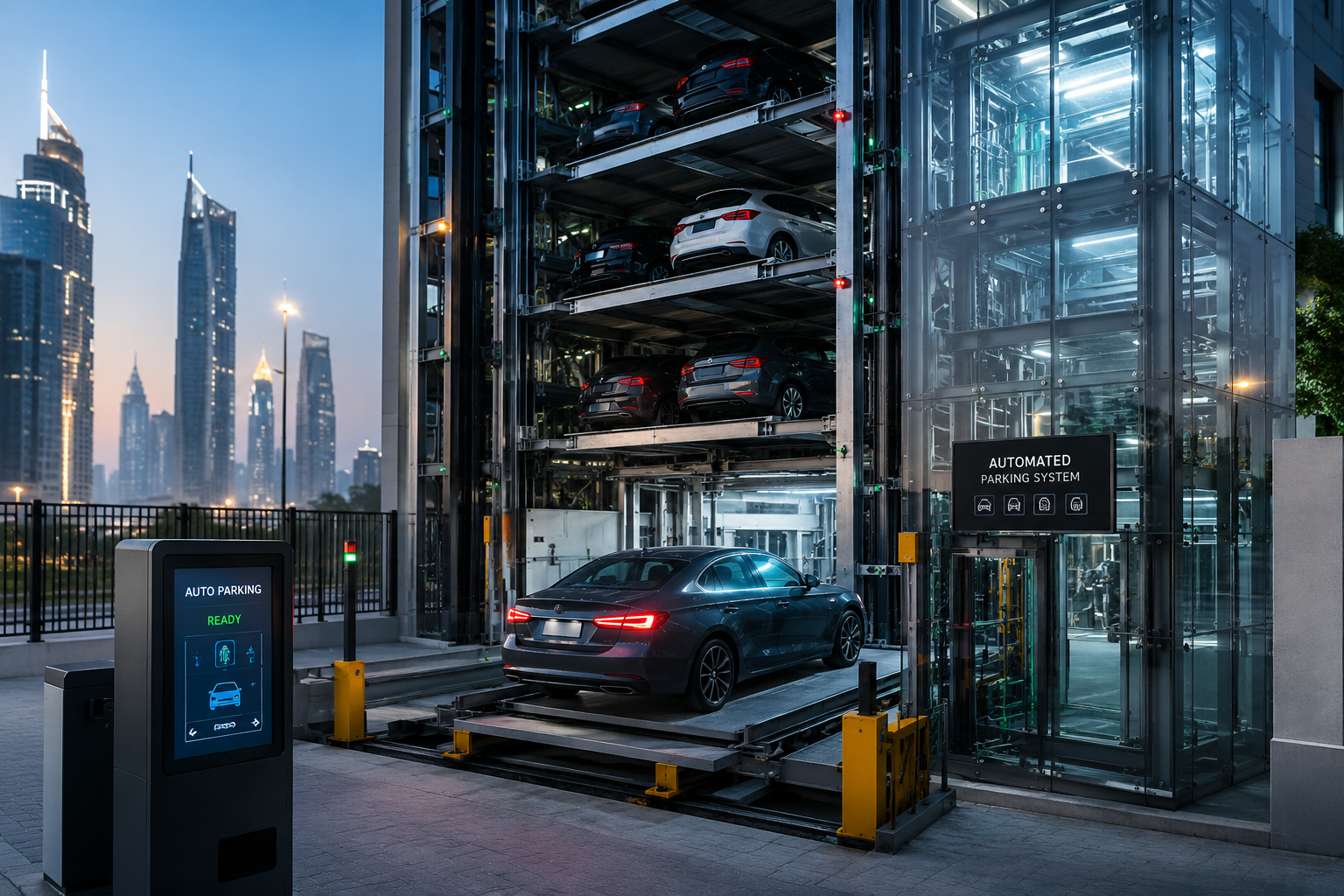
System selection should account for site constraints, vehicle dimensions, throughput requirements, maintenance access, safety provisions, and the expected operating model.
Why This Matters for Saudi Urban Development
Saudi Arabia's urban and infrastructure development creates opportunities to consider more efficient approaches to parking. In locations where developable land is limited or building footprints are constrained, parking arrangements can influence how much space remains available for other uses.
Automated parking may be considered for residential buildings, commercial properties, hotels, healthcare facilities, and mixed-use developments. Its suitability depends on the project's land availability, parking demand, circulation requirements, construction constraints, and operational needs.
Integrating a parking system early in the design process can help project teams evaluate structural coordination, vehicle access, electrical and control requirements, fire and life-safety provisions, and long-term maintenance considerations.
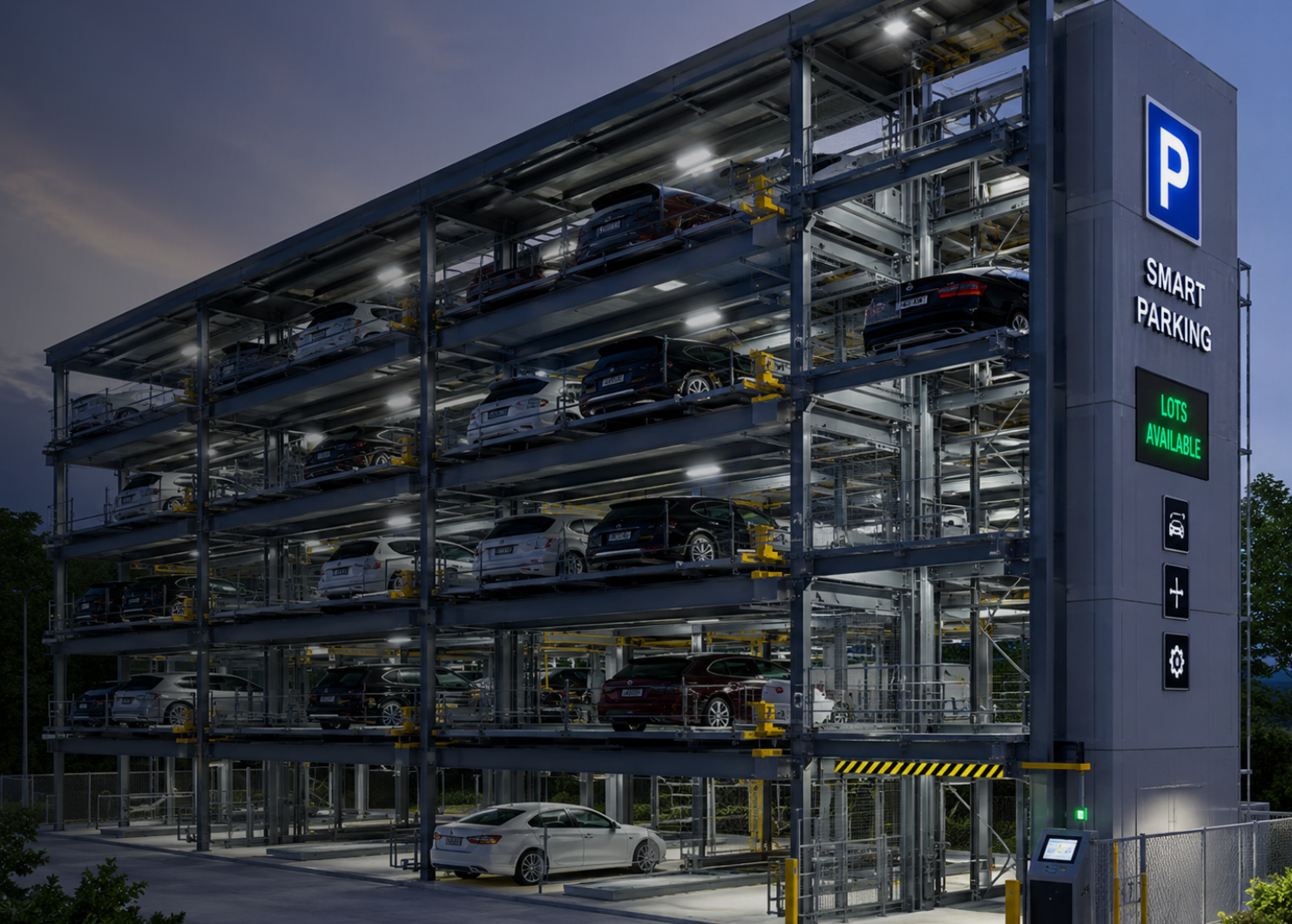
Benefits of Robotic and Automated Parking Systems
Automated parking can offer several advantages when the system is selected and designed around the needs of the development. The actual benefits vary according to the technology, project configuration, site conditions, and operating requirements.
Improved Space Utilisation
Mechanical vehicle movement can reduce the space needed for conventional driving aisles and ramps, potentially allowing more efficient use of the available building footprint.
Organised Vehicle Handling
A controlled transfer process helps structure vehicle entry, storage, and retrieval instead of requiring drivers to navigate through every parking level.
Flexible Building Integration
Depending on the selected configuration, automated parking can be evaluated for sites where conventional parking layouts are difficult to accommodate.
Controlled Access and Monitoring
Integrated controls can support managed access, equipment status monitoring, and more structured parking operations.
These potential advantages should be assessed alongside capital cost, system capacity, vehicle retrieval expectations, maintenance requirements, and the cost of operating the equipment over its service life.
Challenges to Consider for Urban Development
Automated parking is a specialist engineering solution. Successful implementation requires coordinated planning, suitable site conditions, and a clear understanding of how the facility will operate after handover.
Initial Project Cost
Equipment, structural coordination, controls, installation, and commissioning all contribute to the initial investment. A project assessment should compare these costs with the available alternatives.
Technical Integration
The system must be coordinated with building structure, vehicle access, power supply, controls, fire and life-safety design, and applicable local requirements.
Maintenance and Reliability
Mechanical equipment requires planned inspections, maintenance support, spare-parts planning, and clear procedures for responding to faults or service interruptions.
Capacity and Retrieval Planning
Entry arrangements, peak-period demand, vehicle retrieval times, queues, and user instructions should be evaluated before finalising the system configuration.
Best Practices for Implementing an Automated Parking System
Successful implementation starts with understanding the project brief and the conditions of the site. The system should be selected only after the required parking capacity, expected demand, vehicle types, and operational objectives have been clearly established.
1. Assess the Site and Parking Demand
Review the site footprint, available building height, access points, expected arrival patterns, vehicle dimensions, and required parking capacity. These factors help establish whether an automated arrangement is appropriate.
2. Coordinate Design and Engineering Early
Involve the relevant architectural, structural, mechanical, electrical, safety, and parking-system specialists during the design stage. Early coordination helps identify space requirements and interfaces before construction decisions are finalised.
3. Plan for Everyday Operations
Consider the complete user journey, including vehicle drop-off, system operation, retrieval, access management, and assistance during service interruptions. Peak demand and expected retrieval times should inform the system's capacity and layout.
4. Establish Maintenance and Support Requirements
Plan for inspections, preventive maintenance, technical support, operator training, and the availability of replacement components. These measures help the facility team manage the equipment throughout its operational life.
5. Verify Applicable Requirements
Confirm relevant Saudi regulations, building requirements, fire and life-safety provisions, accessibility considerations, and approval requirements with the responsible project consultants and authorities.
The most suitable parking solution is one that balances space efficiency with capacity, safety, reliability, user experience, and long-term operating requirements.
Robotic Parking Systems and Saudi Arabia's Vision 2030
Saudi Arabia's development ambitions have increased attention on urban infrastructure, efficient land use, and the integration of technology into the built environment. Parking is one of the infrastructure considerations that can influence the design and operation of growing residential, commercial, and mixed-use districts.
Automated parking systems can be evaluated as part of this wider development context where project requirements make mechanical vehicle storage a practical option. Their role should be assessed on the basis of project needs, engineering feasibility, lifecycle cost, and the experience expected by building users.
Rather than treating automation as a universal replacement for conventional parking, developers can compare different configurations to determine which solution best supports the site's objectives.
Robotic and Automated Parking Solutions in Saudi Arabia
KTC Saudi works in parking and intelligent infrastructure solutions. Parking-system requirements vary from one development to another, making project-specific assessment an important part of solution planning.
When evaluating an automated parking project, the key considerations include the available site, required capacity, system configuration, vehicle movement, access controls, safety interfaces, maintenance strategy, and integration with the wider building design.
Project-Specific System Planning
Evaluate the development's parking demand, space constraints, operational priorities, and technical interfaces to identify an appropriate parking-system approach.
Integrated Parking Infrastructure
Consider how parking equipment, access management, monitoring, building services, and operational processes work together within the overall facility.
Early consultation can help project teams identify the principal requirements, evaluate the available options, and coordinate parking infrastructure with the wider development plan.
Conclusion
Robotic and automated parking systems provide an option for developments seeking to make more structured use of available space. Their suitability depends on the site, expected demand, technical requirements, investment, and long-term operating model.
For projects in Saudi Arabia, a considered approach to feasibility, engineering coordination, safety, and maintenance can help determine whether automated parking is the right fit. Evaluating these factors early allows developers and project teams to make decisions based on practical requirements rather than technology alone.
Frequently Asked Questions
Answers to common questions about robotic and automated parking systems.
It is a parking arrangement that uses mechanical equipment and control technology to transfer vehicles into and out of designated parking spaces, reducing the need for drivers to park the vehicles themselves within the storage area.
Potential benefits include improved use of available space, organised vehicle handling, controlled access, and integration with building operations. The actual outcome depends on the selected system and project requirements.
They may be considered for residential and mixed-use developments, commercial buildings, hotels, healthcare facilities, and other projects where the site and operating requirements are suitable.
No. Suitability depends on site conditions, required capacity, budget, traffic patterns, vehicle retrieval expectations, engineering constraints, maintenance support, and applicable regulations.
Important considerations include site feasibility, parking demand, vehicle dimensions, system capacity, structural coordination, safety requirements, power and control systems, maintenance, and the complete vehicle entry and retrieval process.
Automated parking can be evaluated as one option for space-efficient urban infrastructure. Its relevance to a particular development depends on the project's goals, feasibility, and practical engineering and operational requirements.
Build Smarter Urban Developments with Parking Solutions
Explore parking infrastructure options designed around your project's space, capacity, and operational requirements.
Discuss Your Project